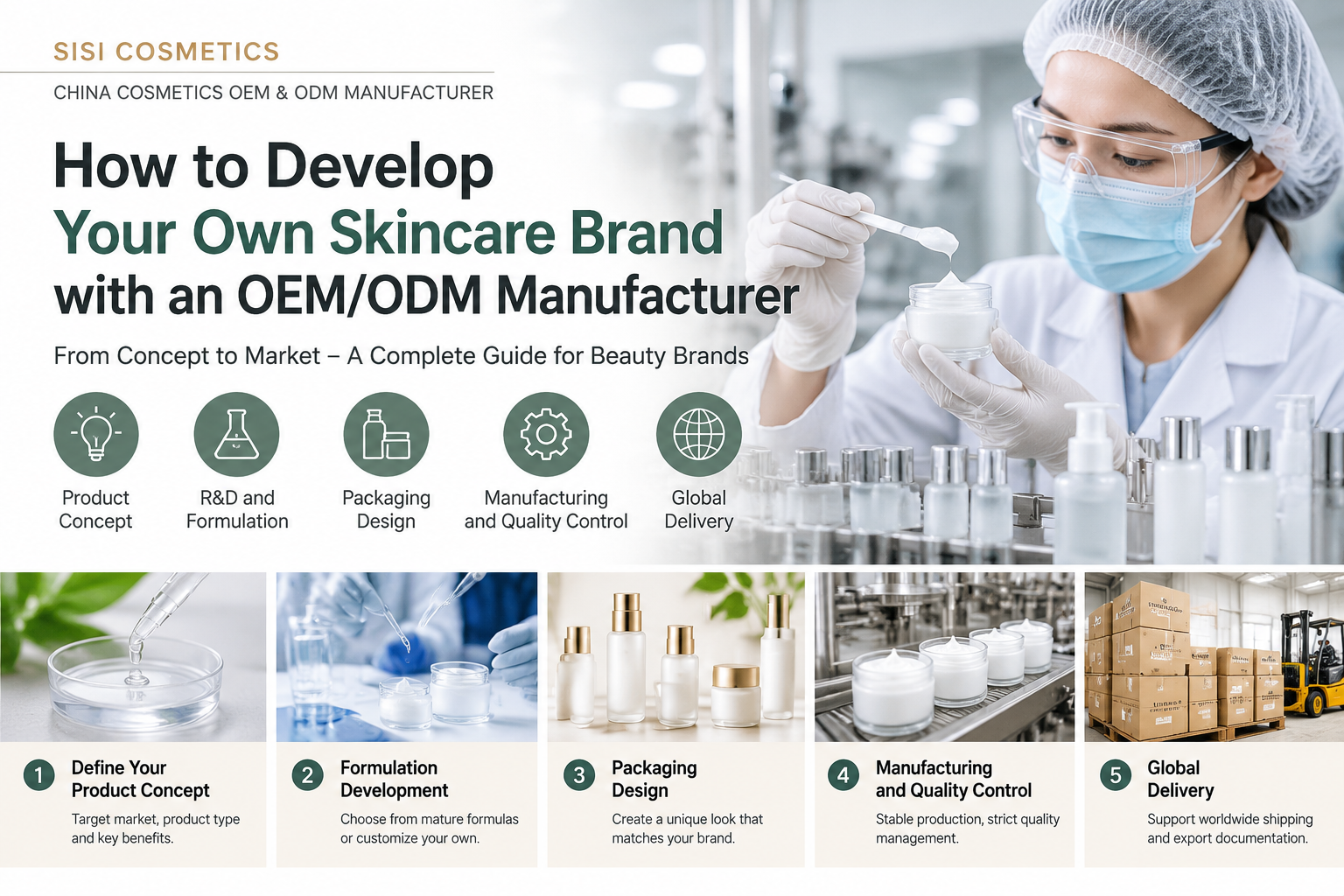
How to Develop Your Own Skincare Brand with an OEM/ODM Manufacturer
Launching a skincare brand involves more than choosing a product and designing attractive packaging. Brands also need to consider formulation, product positioning, packaging compatibility, manufacturing requirements, quality management and target-market expectations.
Working with a skincare OEM/ODM manufacturer in China can help businesses coordinate these activities and turn a product concept into a market-ready skincare product.
For startups, established beauty brands, importers and distributors, understanding the product development process is an important first step toward building a successful skincare business.
1. What Is Skincare OEM and ODM Manufacturing?
Skincare OEM and ODM manufacturing are two common ways to develop and produce skincare products for a brand.
OEM Skincare Manufacturing
OEM stands for Original Equipment Manufacturer.
In a typical OEM project, the brand provides an existing formula, product specification or detailed product brief. The manufacturer works according to the agreed requirements to coordinate production, packaging and related manufacturing arrangements.
OEM skincare manufacturing may be suitable for businesses that already have a clear product concept and defined technical requirements.
ODM Skincare Manufacturing
ODM stands for Original Design Manufacturer.
In an ODM project, the manufacturer may support product development by helping the brand evaluate existing formulations or explore customized formulation options, depending on the available capabilities and project requirements.
ODM skincare development may be suitable for businesses that have a product concept but need support with formulation selection, product specifications and packaging coordination.
The exact scope of OEM and ODM services varies by manufacturer. Brands should confirm the available services, responsibilities, costs and development timeline before starting a project.
2. Define Your Skincare Product Concept
Before contacting a skincare manufacturer, define what you want to develop and who will buy it.
Consider the following questions:
- Who is your target customer?
- Which market will the product serve?
- What type of skincare product do you want to launch?
- What are the product's main benefits and positioning?
- Do you prefer an existing formulation or a customized formula?
- What packaging style and price positioning are you considering?
Common skincare product categories include facial cleansers, toners, facial serums, moisturizers, face creams, masks and body care products. Sunscreen development may require additional regulatory and testing considerations depending on the destination market.
A clear product brief helps the manufacturer evaluate your requirements and identify the next steps.
3. Choose the Right Formulation
Formulation is one of the most important parts of skincare product development.
Brands should consider the intended product benefits, ingredient preferences, texture, fragrance, target customer and applicable market requirements.
For example, a facial serum may require a lightweight texture, while a moisturizer may need a richer feel. Fragrance preferences can also vary depending on the product category and customer expectations.
There are generally two approaches to formulation:
Existing formulation: A suitable established formula may help simplify the initial development process, subject to availability, suitability and verification.
Customized formulation: A formulation may be developed or adjusted according to the agreed product brief, ingredient requirements, target texture and intended positioning.
Before confirming production, brands should review samples and agree on the relevant product specifications. Any performance, safety or efficacy claims should be supported by appropriate evidence.
4. Select Packaging That Fits Your Brand
Packaging influences product presentation, user experience, product protection and shipping arrangements.
Depending on the product and available options, skincare packaging may include bottles, jars, tubes, pumps, droppers and other suitable containers.
When evaluating packaging, consider:
- Compatibility between the formula and packaging materials
- Container capacity and dispensing method
- Label design and required product information
- Packaging appearance and brand identity
- Shipping protection and transportation requirements
- Minimum order quantities and overall budget
It is important to confirm packaging availability, material suitability, artwork requirements and production arrangements before approving the final design.
5. Understand the Manufacturing and Quality Process
A reliable skincare manufacturing project requires clear communication and coordination between product development, packaging and production.
Before placing an order, ask the manufacturer how the project will be managed and which quality procedures apply.
Important topics to discuss include:
- Product specifications and sample approval
- Raw material and packaging requirements
- Production planning and process controls
- Applicable inspections and testing arrangements
- Batch documentation and traceability, where available
- Product storage, transportation and export documentation
Quality procedures and testing requirements should be confirmed for the specific product and destination market.
Brands should also request relevant supporting documents and verify any claimed certifications, licenses or quality standards rather than relying on general marketing statements.
6. Confirm MOQ, Costs and Lead Time
Minimum order quantity (MOQ), product cost and lead time can significantly affect a new skincare brand's launch plan.
Before requesting a quotation, prepare as much information as possible about the product, formulation, packaging and expected order quantity.
A useful quotation request should include:
- Product category and target specifications
- Existing or customized formulation requirements
- Preferred ingredients and texture
- Packaging type, size and design requirements
- Estimated order quantity
- Target market and required documentation
- Desired sample and launch timeline
Ask the manufacturer to clarify which items are included in the quotation, such as formulation development, sampling, packaging, manufacturing and any applicable testing or documentation fees.
MOQ and production lead time vary according to the product, packaging, formulation and project requirements. Confirm these details with the manufacturer before making commercial commitments.
7. How to Choose a Skincare OEM/ODM Manufacturer in China
When comparing skincare OEM/ODM manufacturers, do not evaluate a supplier based on price alone.
Consider the following factors:
Product relevance: Does the manufacturer support the skincare categories you want to develop?
Development support: Can the team discuss formulation options, samples and packaging requirements?
Manufacturing transparency: Can the supplier explain its actual production arrangements and provide appropriate factory information?
Quality management: Are the relevant quality procedures, testing arrangements and documents clearly explained?
Communication: Are specifications, quotations, responsibilities and project milestones confirmed in writing?
Commercial suitability: Are the MOQ, budget, lead time and packaging options appropriate for your business?
You can also request relevant factory photographs, facility information and supporting documents to help evaluate the supplier.
A suitable manufacturing partner should understand your product requirements and communicate clearly about what can be delivered, what needs further confirmation and what the project will involve.
8. Start Your Skincare OEM/ODM Project with Guangzhou Sisi Biotechnology
Guangzhou Sisi Biotechnology Co., Ltd. is a cosmetics manufacturer based in Guangzhou, Guangdong, China, specializing in skincare OEM, ODM and private label manufacturing solutions.
We work with businesses developing skincare products for their own brands and target markets. Depending on the confirmed project scope, cooperation may involve formulation selection, customized product development, packaging coordination, sampling, manufacturing arrangements and quality management.
Whether you are preparing to launch a new skincare line or expanding an existing product range, the first step is to define your product concept and discuss your requirements with a manufacturing partner.
To help us understand your project, please share:
- Your target skincare product
- Your target market
- Your preferred formula, ingredients or product texture
- Your packaging preferences
- Your estimated order quantity
- Your target development schedule
Our team can then discuss the project requirements and the available next steps with you.
Frequently Asked Questions
What is the difference between skincare OEM and ODM?
OEM generally focuses on manufacturing according to an agreed product specification or existing formula. ODM may include additional product development and formulation support. The exact scope depends on the manufacturer and project.
Can I develop a private label skincare product?
Private label skincare projects may involve selecting an available formulation, choosing suitable packaging and preparing product presentation for your brand. Available options, MOQ and development requirements should be confirmed with the manufacturer.
What information should I prepare before requesting a quotation?
Prepare the product category, target market, formulation preferences, packaging requirements and estimated order quantity. The more clearly you define your requirements, the easier it is to discuss project feasibility and costs.
How do I choose a skincare manufacturer in China?
Evaluate the manufacturer's relevant product experience, actual capabilities, quality procedures, communication, documentation and commercial terms. Request supporting information and confirm important details before placing an order.
Discuss Your Skincare Project
Looking for a skincare OEM/ODM manufacturer in China?
Contact Guangzhou Sisi Biotechnology Co., Ltd. to discuss your product concept, formulation requirements, packaging preferences and manufacturing plans.
Email: info@glowoncosmetics.com
Phone / WhatsApp: +86 186 8045 7728
Share your product brief with us to begin a discussion about your skincare manufacturing project.
 Amy Zhong
